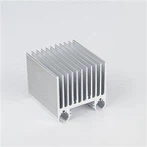
The general family curtains are mostly of curtains. Hanging such curtains, in order to choose the type aluminum alloy curtain rail is the most economical and simple, and beautiful and practical. The complete set of type curtain rails is composed of aluminum alloy rail and some spare parts, of which the work rail is the main component of hanging curtains, and for the sliding of curtain hooks. Large feet (rail buckles) are used to secure the curtain rails, there are small holes through which the curtain rails can be screwed to the wall, roof or curtain box (3 to 4 curtain rails per meter). Walls or roofs withstand the burying of screws, commonly wooden pillows, expansion screws or ceiling screws), small feet (rolling resistance) fixed to both ends of the curtain rail to block the "roller", slide off the end of the rail, and can be used to secure both ends of the curtain. The role of the roller (small hoist) is that the curtains are hung on the "rollers" by "hooks" for opening and closing the curtains (about 7 to 8 curtains per meter). Hooks (winter hooks) are designed to hang curtains.
The aluminum rail, which is the main part of the curtain equipment, is available in aluminum shops and decorative shops. The size is up to 6 meters, and the mounting elbow can be intercepted at the required length.
The type curtain rail relies on "big feet" and "big feet" fixed to walls or roofs or curtain boxes. Use a few "big feet" on the curtain rail, depending on the weight of the curtain. Generally every 30 to 40 cm an "big foot" 1. "Big feet" on the top, bottom, front and rear have screw holes, dedicated to screws through the fixed curtain rail. The installer is as follows:
(1) Draw a position on a brick wall, canopy or curtain box according to the distance of "big feet".
(2) Use a chisel or electric drill in a well-drawn position, nailed into a wooden wedge or buried in a plastic expansion screw.
(3) With screws installed with the work rail. "Big feet", before tightening to adjust the position of the work rail.
(4) Connect the rollers and hooks to the work rail.